Cave painting
UNESCO World Heritage
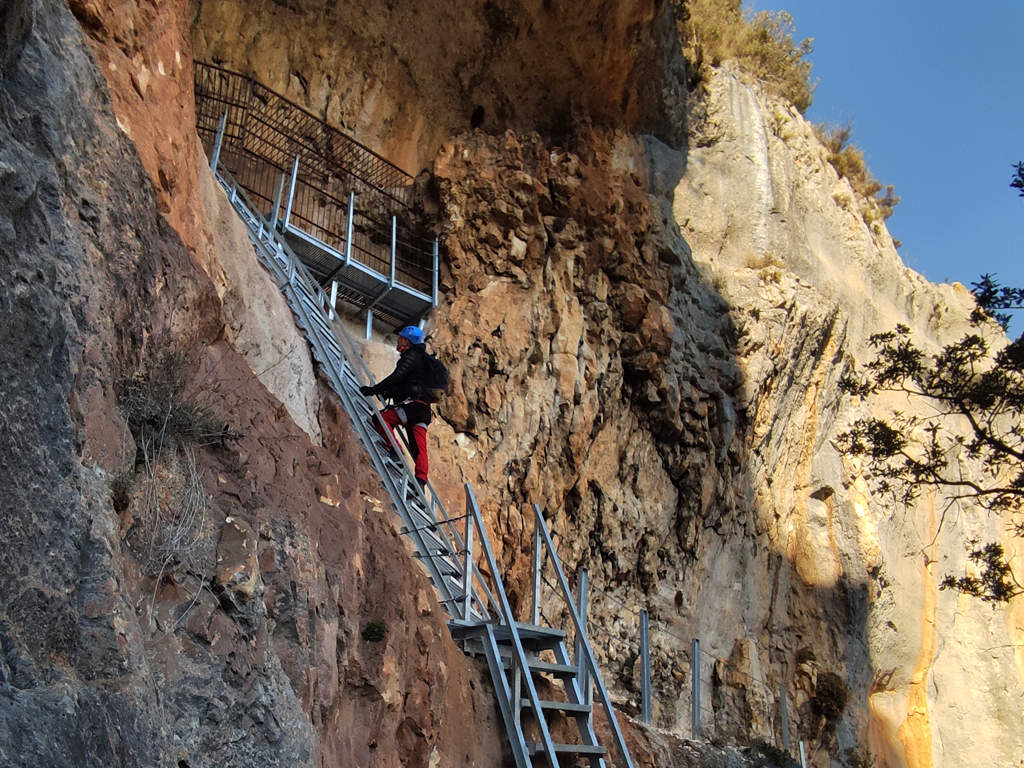
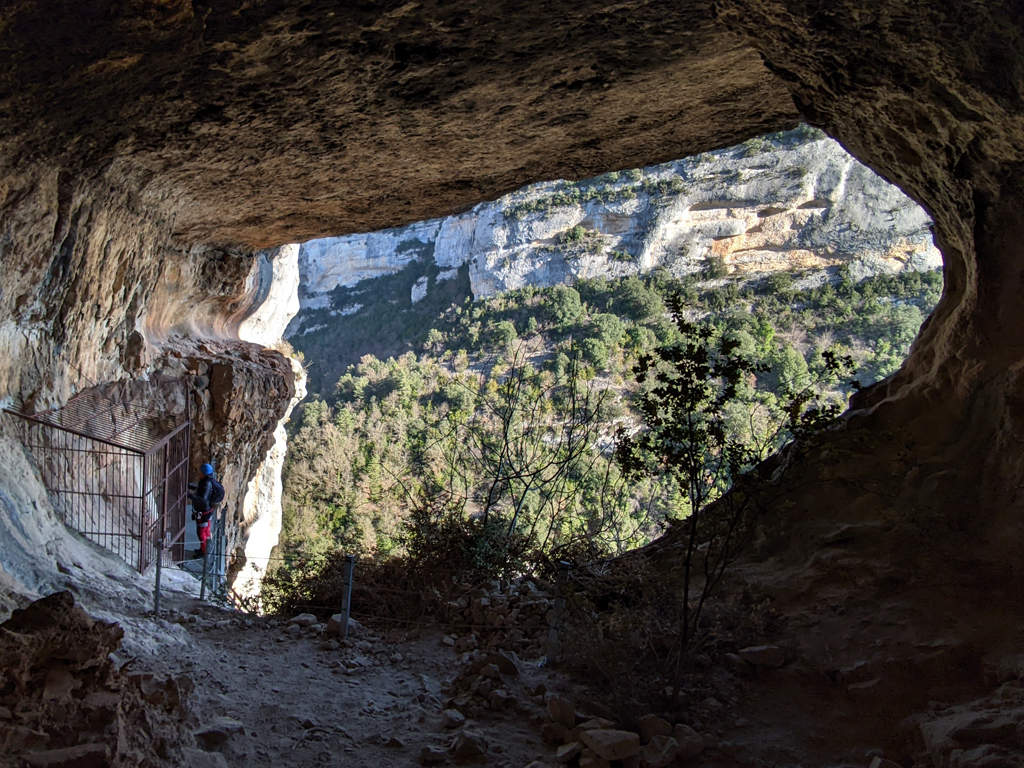
In Lecina, in the municipality of Bárcabo (Huesca) we find the greatest concentration of Rock Shelters of the Sobrarbe. The Escaleretas trail affords us the opportunity to visit the schematic Cave Art (5000 to 1500 BC) of the rock shelters of Gallinero I and II, Las Escaleretas, Lecina Superior and Barfaluy I, II, and III.
The Cave Art of recent prehistory located in the Mediterranean Basin of the Iberian Peninsula is of an impressive size and depicts a crucial stage in the development of the human being, through paintings, the style and subject matter of which are one of its kind. For this Outstanding Universal Value, the collection formed by 700 sites in Andalucía, Aragón, Castilla-La Mancha, Cataluña, the Region of Murcia and the Community of Valencia was, in 1998, included in the list of UNESCO World Heritage sites. The Cave Art around the River Vero is part of the Prehistoric Rock Art Trails of the Council of Europe, certified in 2010.
The Gallinero shelters
The Gallinero collection, with its schematic art (5000- 1500 BC), was the first prehistoric rock art to be discovered along the Vero basin.
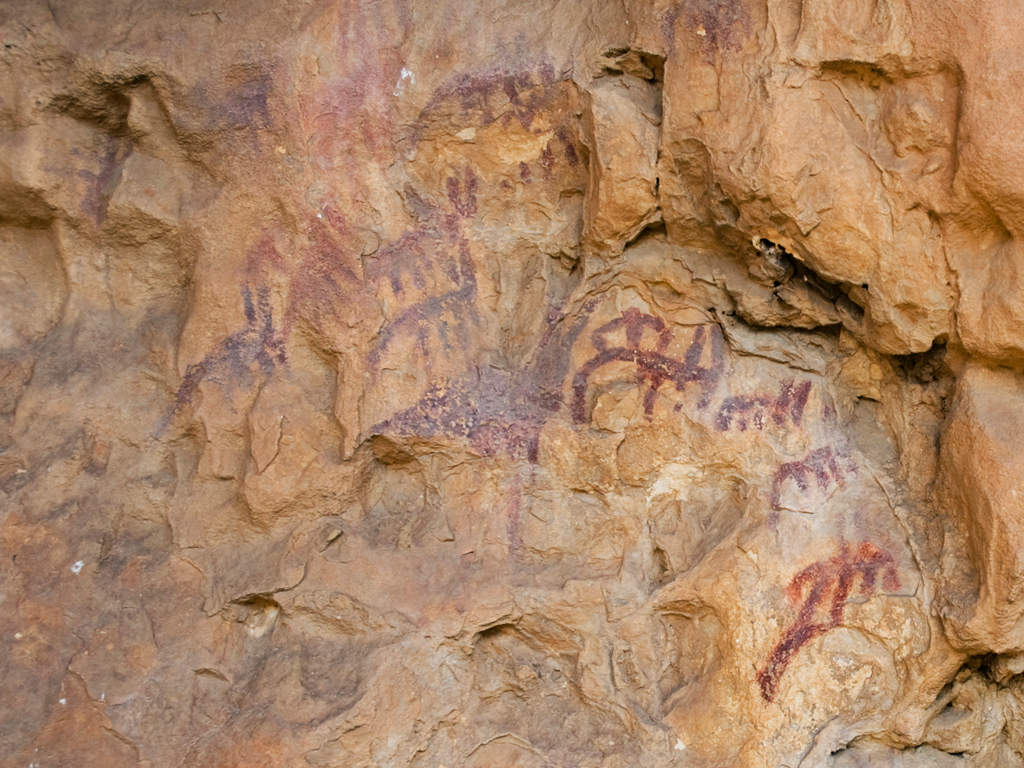
Gallinero I, the first of the shelters to visit, shows a group of red quadrupeds and several abstract motifs. You can then go on to visit: Gallinero II, the most outstanding of these shelters. The group of motifs (over 55 of them, mostly quadrupeds) and their similarity in style and colour suggests that its authors were possibly trying to compose a scene.
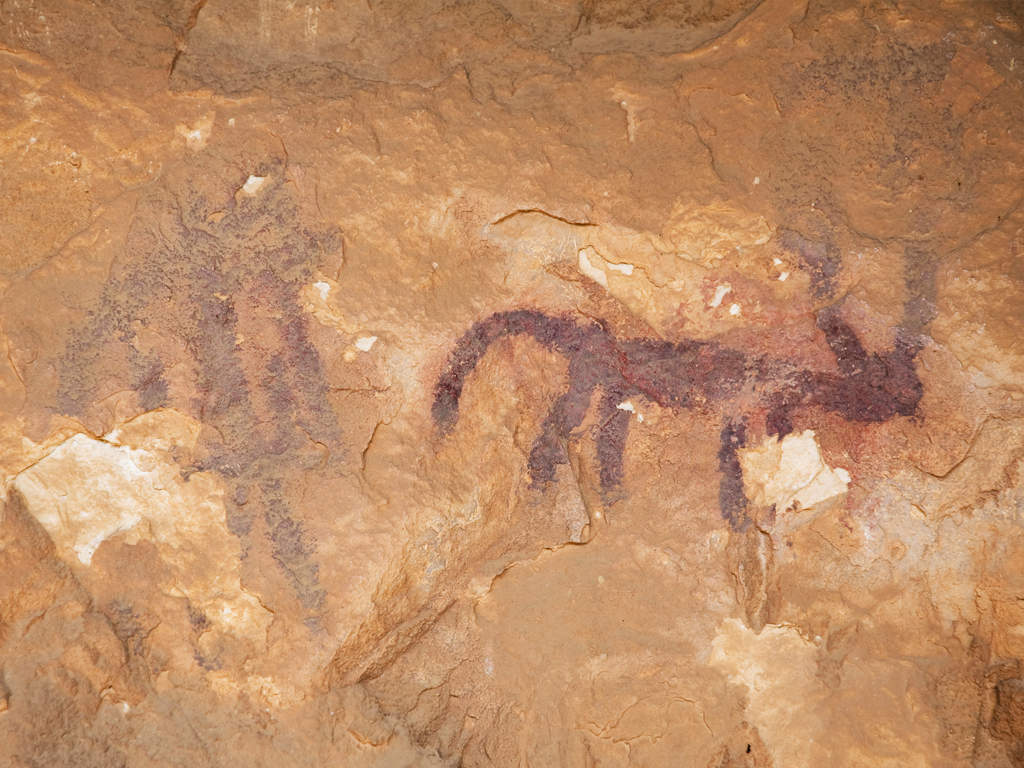
The Gallinero shelters IIIA and IIIB, which are not accessible to the public, show various representations of quadrupeds and abstract motifs.
The Lecina Superior shelters
This huge shelter (20 meters wide) that is opened to the river Vero canyon, has Schematic Art distributed in six sectors.
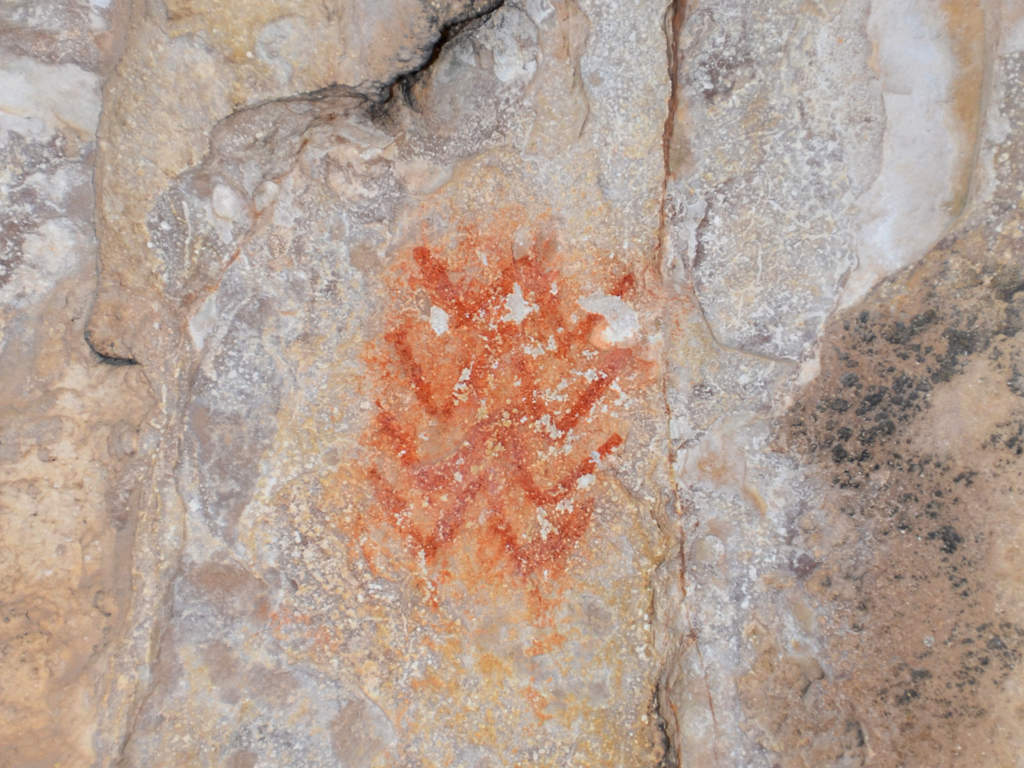
The Schematic paintings (5,000 to 1,500 BC) were made by Neolithic and Metal Age societies who brought a new ways of life and production as agriculture and stockbreeding. They brought a peculiar artistic style characterized by abstraction of human beings, animals, symbols…
In a hollow, perhaps previously prepared, in the center of the site there’s a scene with three black quadrupeds painted on a white layer. A red human figure, whose arms are in cross, is over one of those animals.
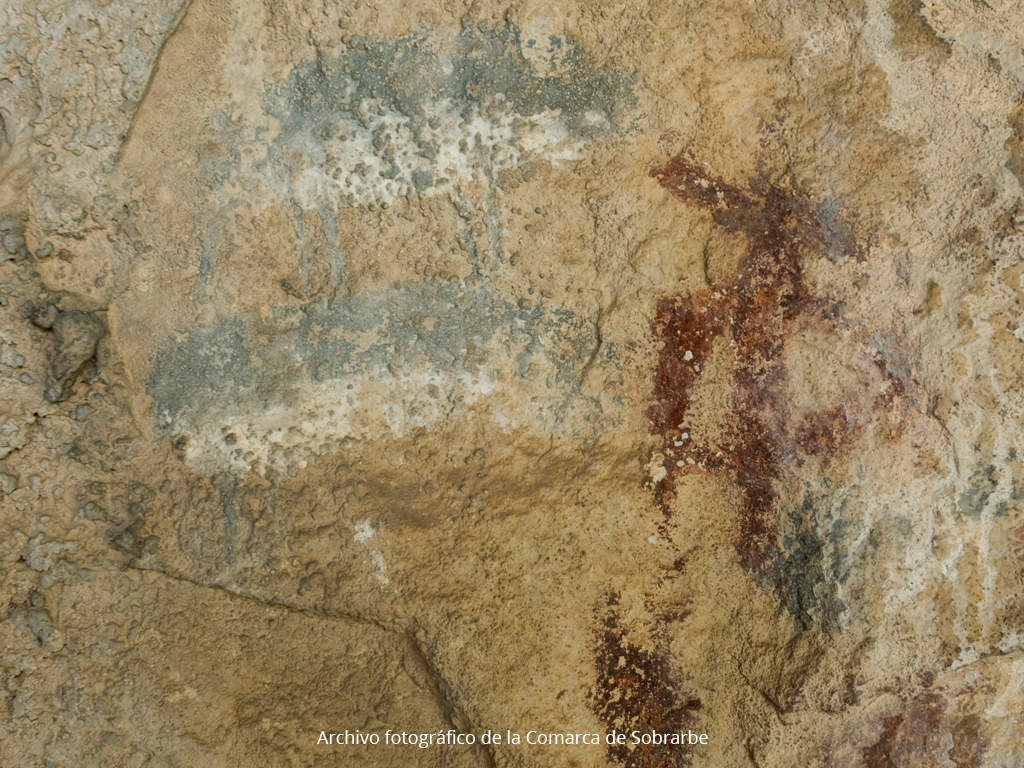
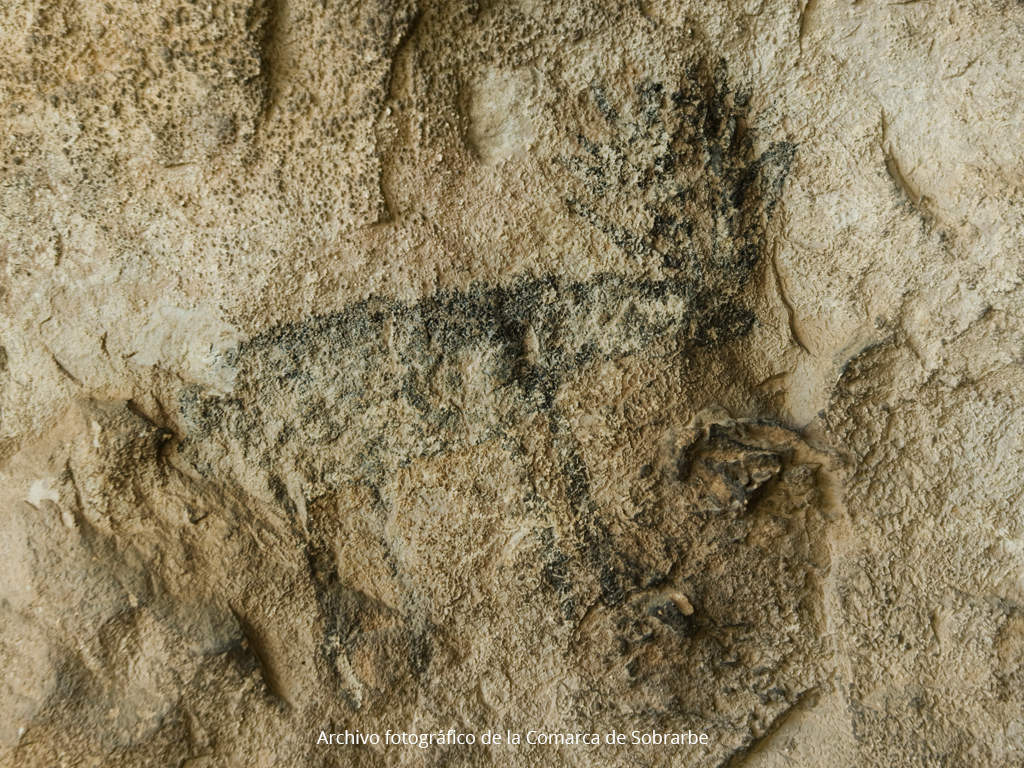
The overlapping of several motifs suggests different chronologies. Other motifs such as a deer, two bovines, a possible canine and a quadruped followed by bars (all in black colour); three anthropomorphouses with stretched arms and legs, several signs as lines, fingerings… (all in red colour) are distributed on the walls of this site.
The Barfaluy shelters
Barfaluy shelters are on the top of an amazing cliff, La Choca (tributary of river Vero). The major number of cave art is located in its beautiful environment.
During the visit to Barfaluy I, II and III it’s possible to admire a wide group of Schematic paintings, the most abundant in River Vero.
Between 5,000 and 1,500 BC, the agrarian and livestock societies of the Neolithic and the subsequent ones of the Metal Age went to these hidden cavities to paint their believes and their particular view of the world. It’s very characteristic the high level of abstraction when they painted people and animals.
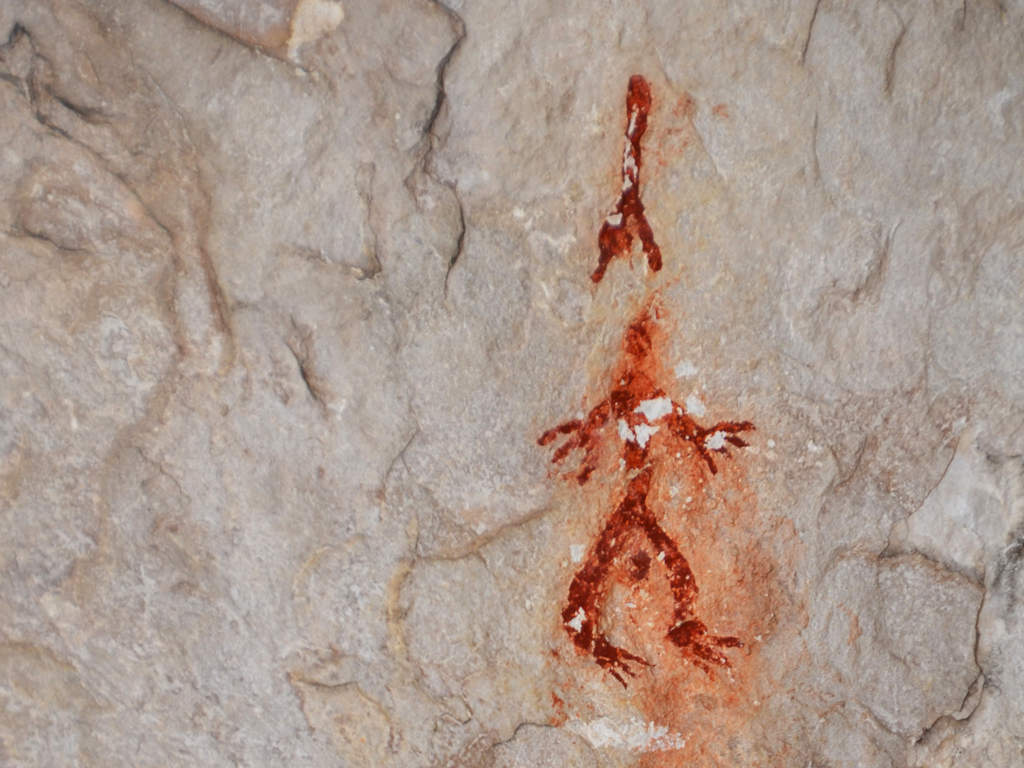
Barfaluy shelters have many red and black paintings. There are numerous signs in the shape of a dot, cross, lines or zigzag. It’s surprising a scene with human beings with long toes and fingers. One of them is carrying a kind of cart in which there’s a person sits on it. As well we can see a possible rider, an idol, eleven goats and the horns of a big deer.
Besides its archaeological values, Barfaluy has an ethnological interest because of an old arnal (traditional honeycombs). There are many other shelters with Schematic paintings: Mallata, Quizans, Regacens or Gallinero, among other ones.